
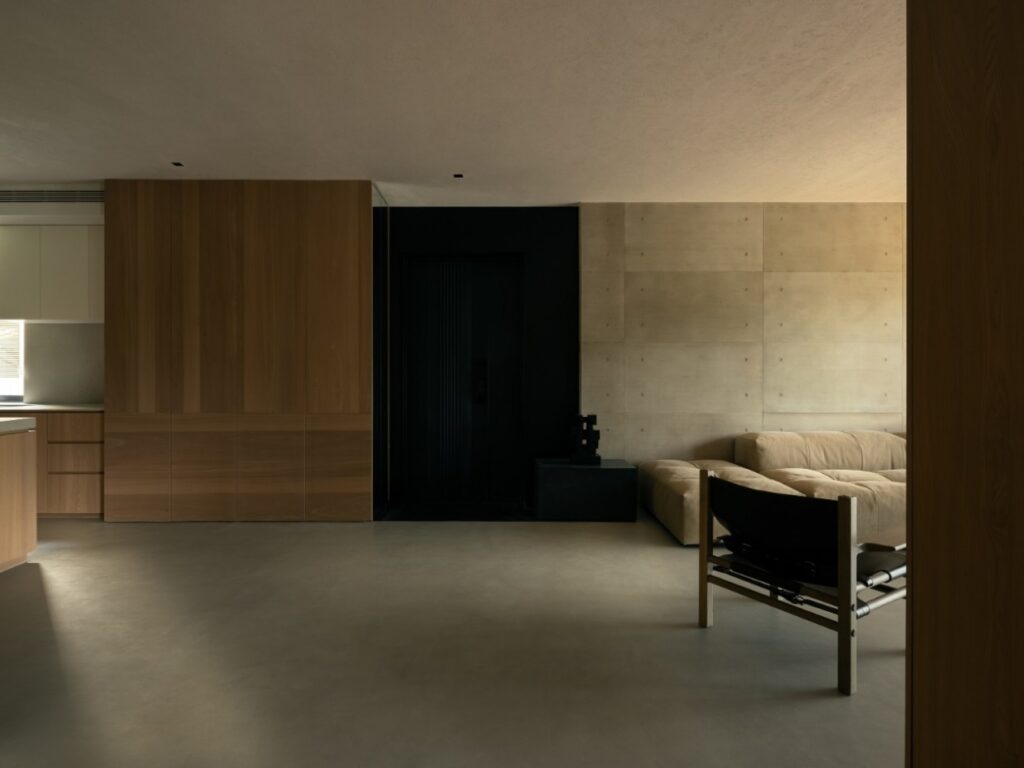
When they first entered the house, the original layout was quite awkward, making the space feel cramped, with poor openness and overall lighting. The homeowners, a couple, prefer Japanese-style design. Since they work in the internet industry and are usually busy, they only needed a master bedroom and occasionally a tatami room that could serve as a guest room and tea room.
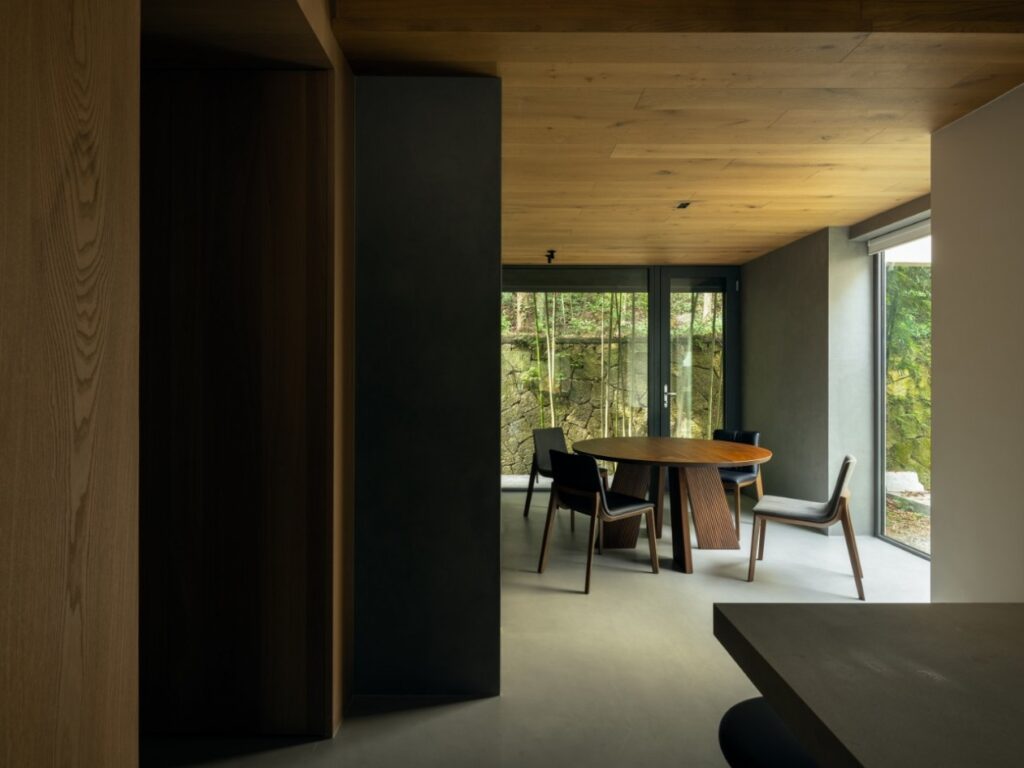
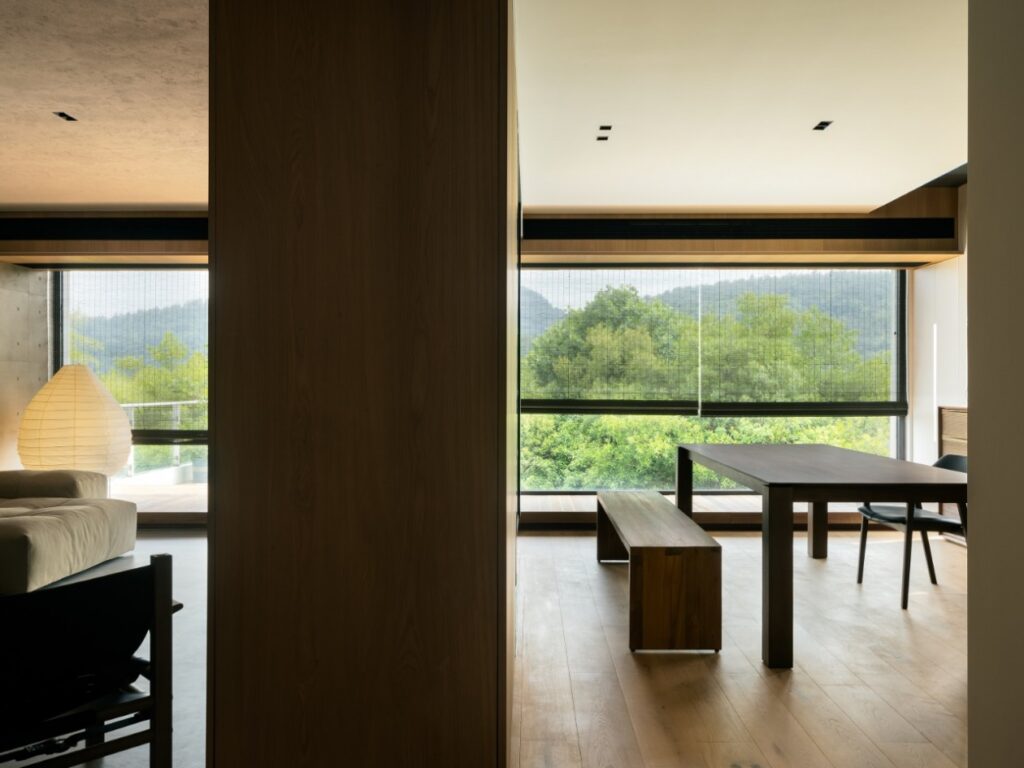
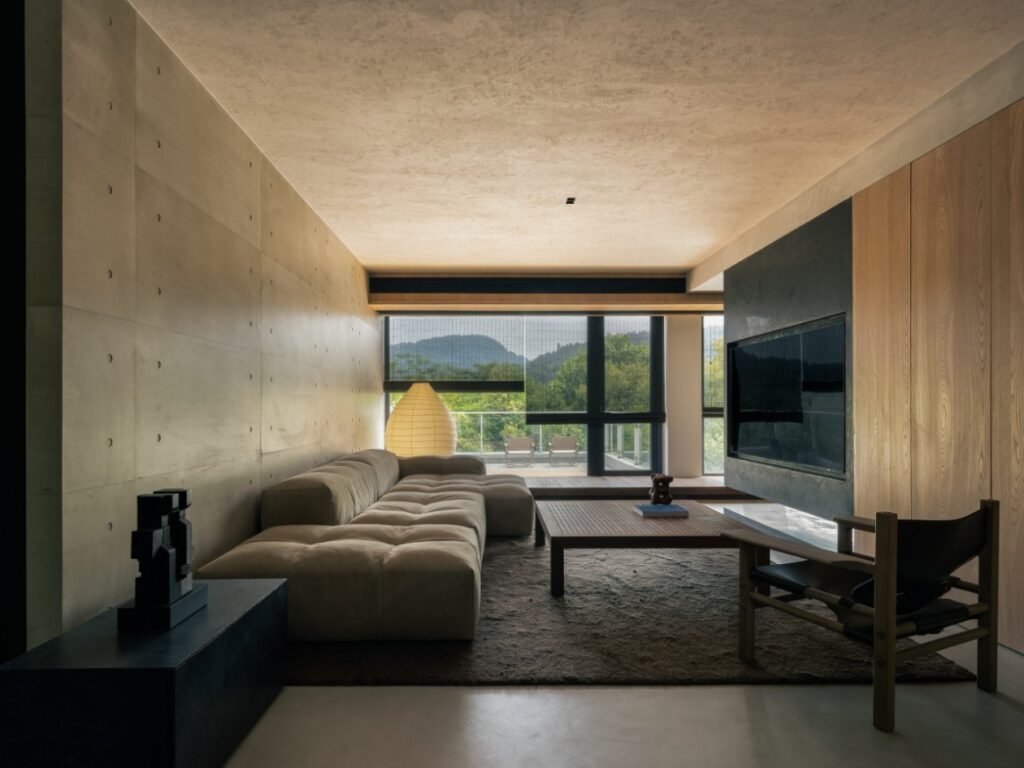
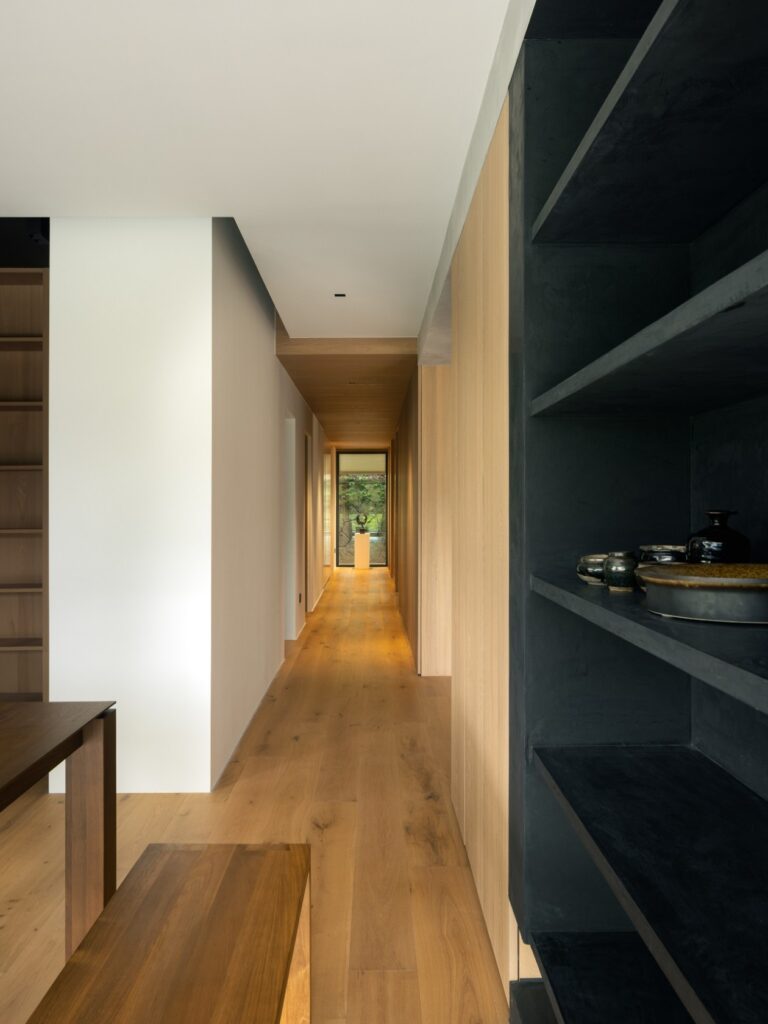
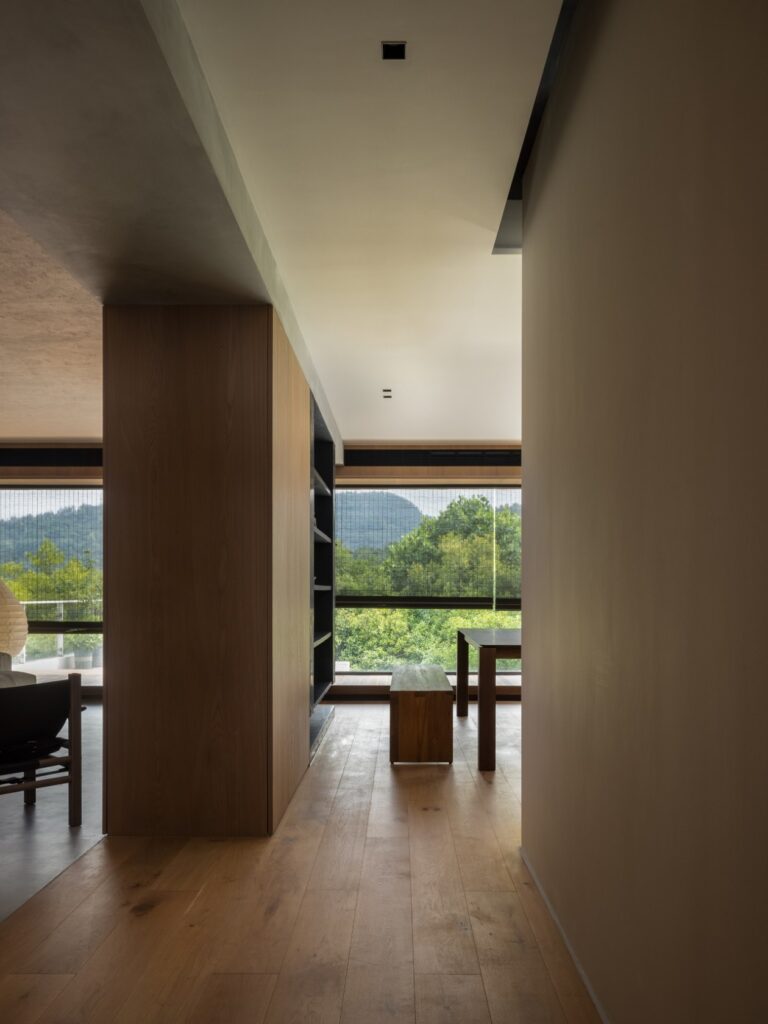
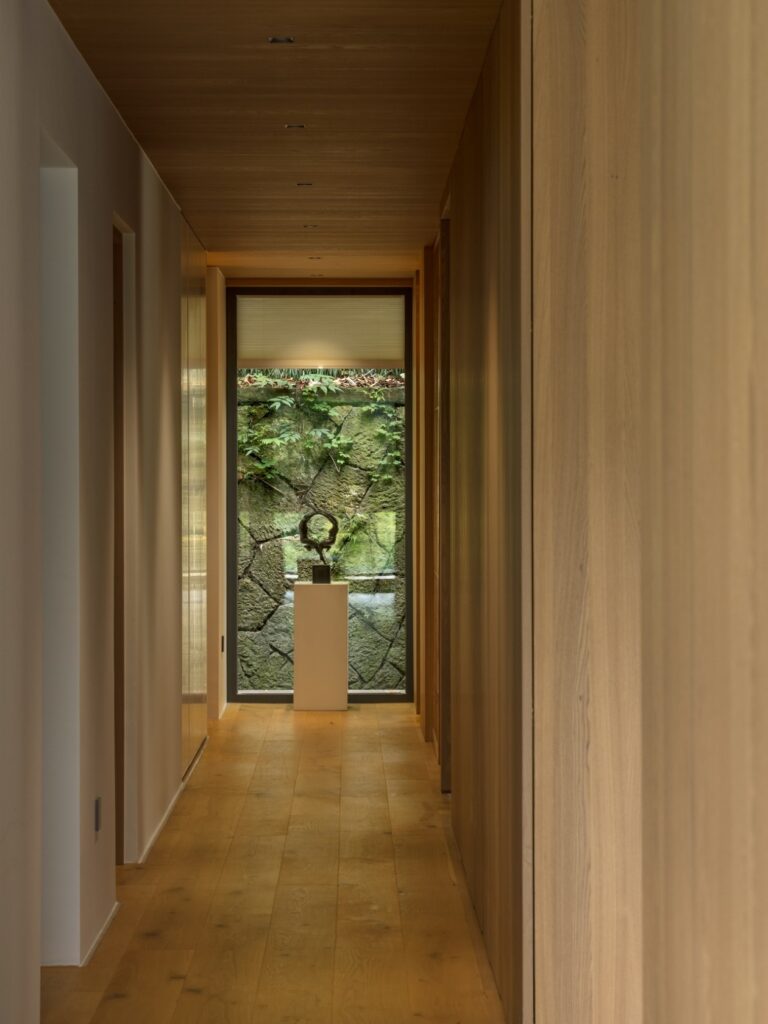
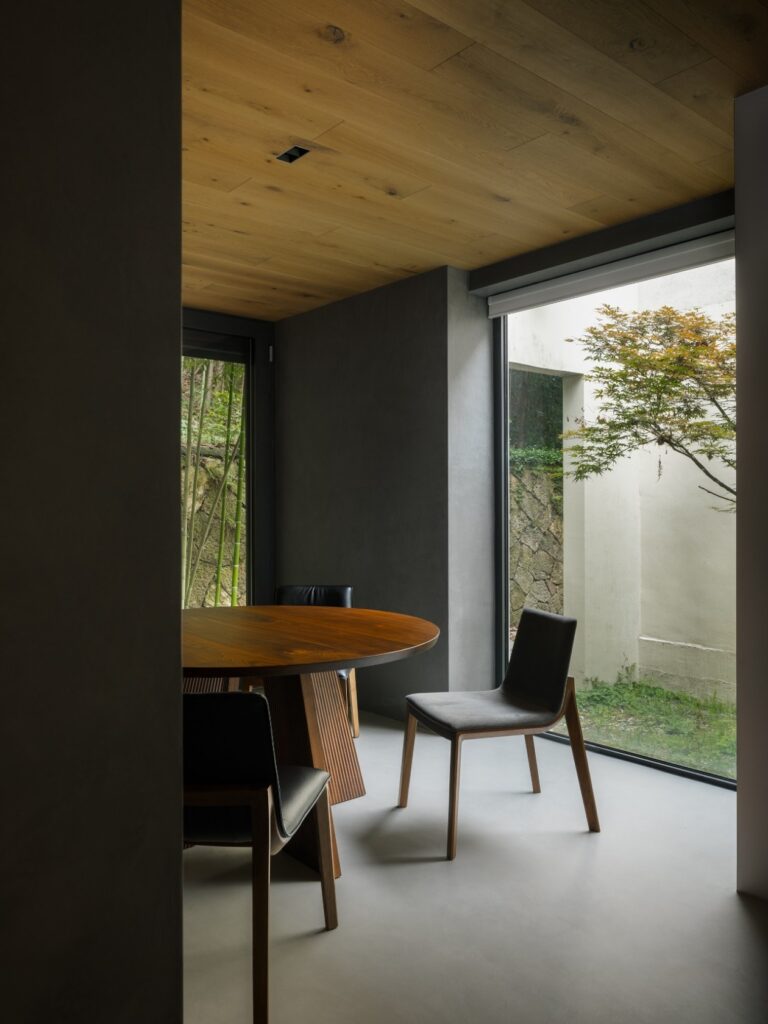
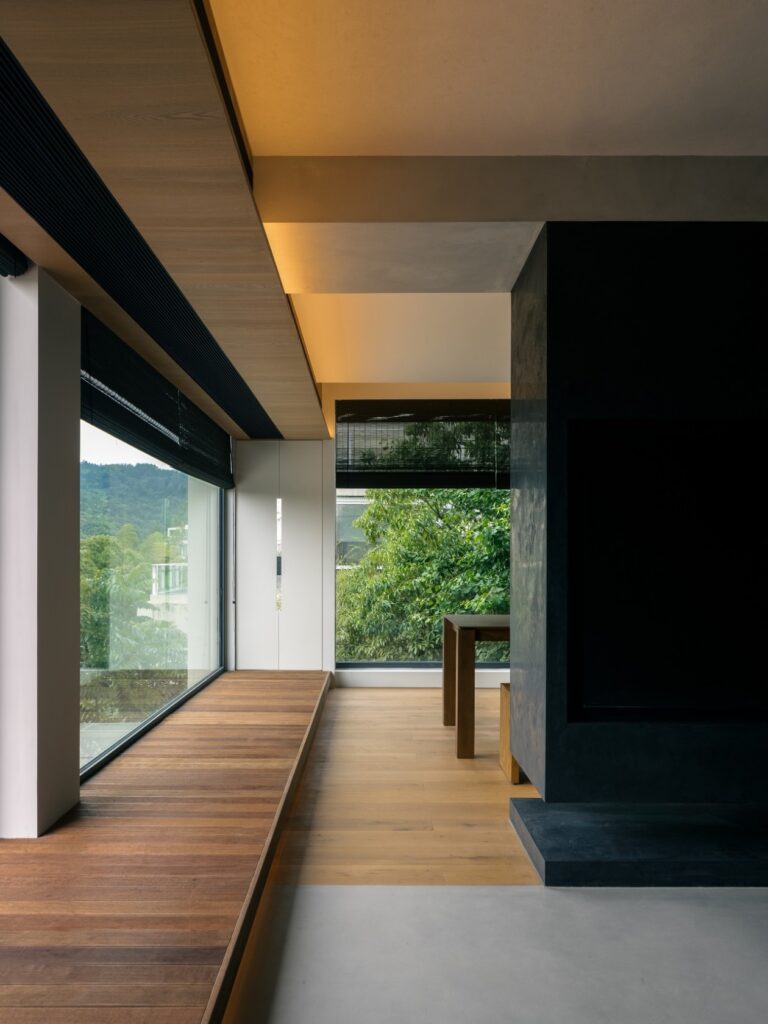
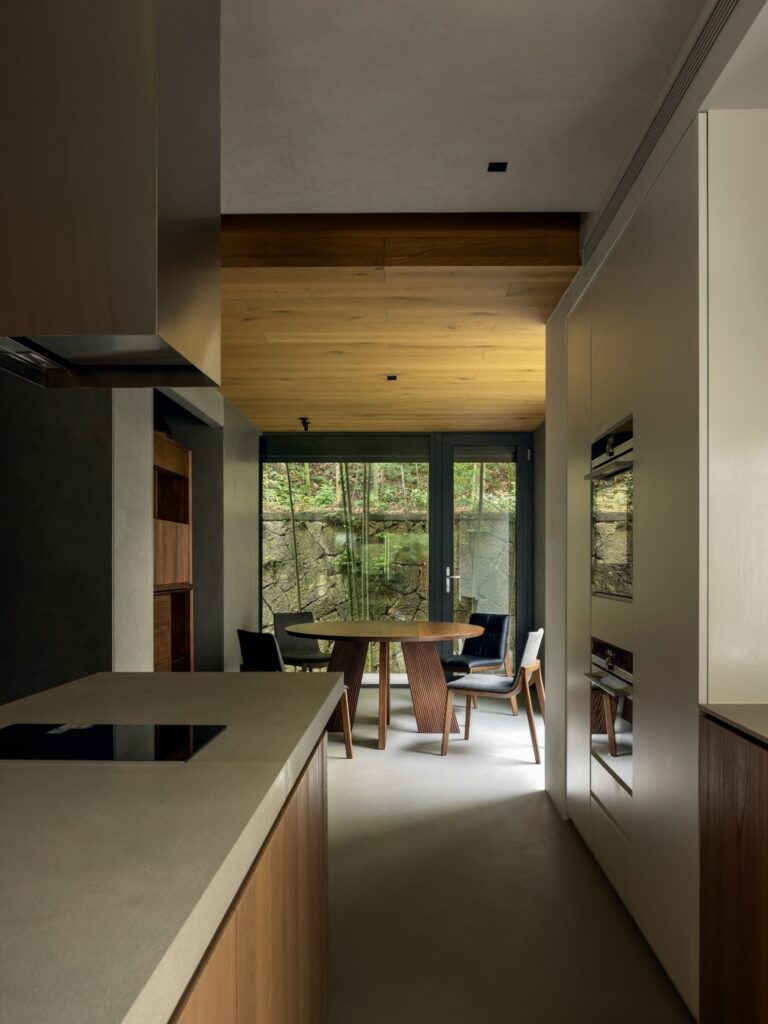
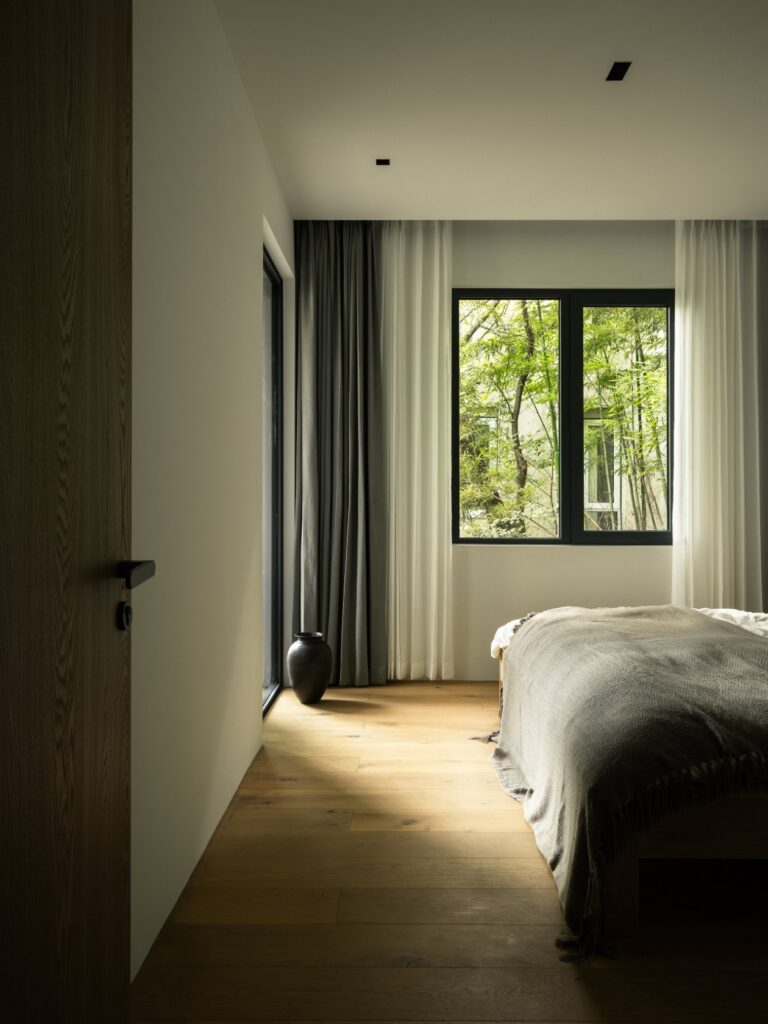
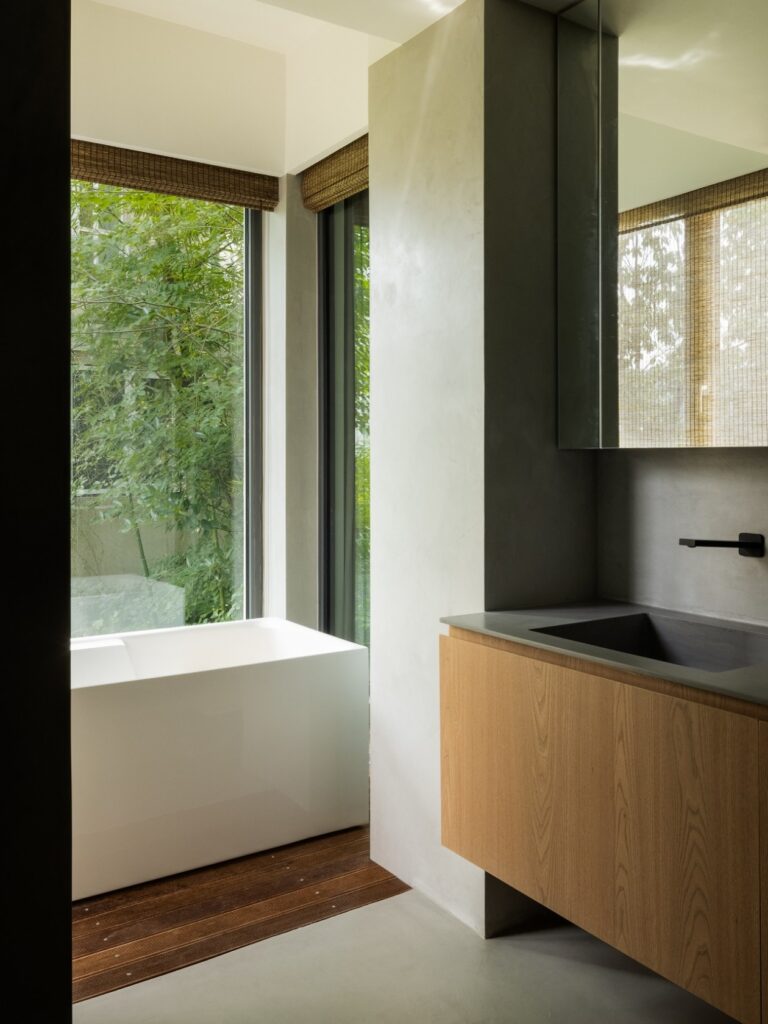
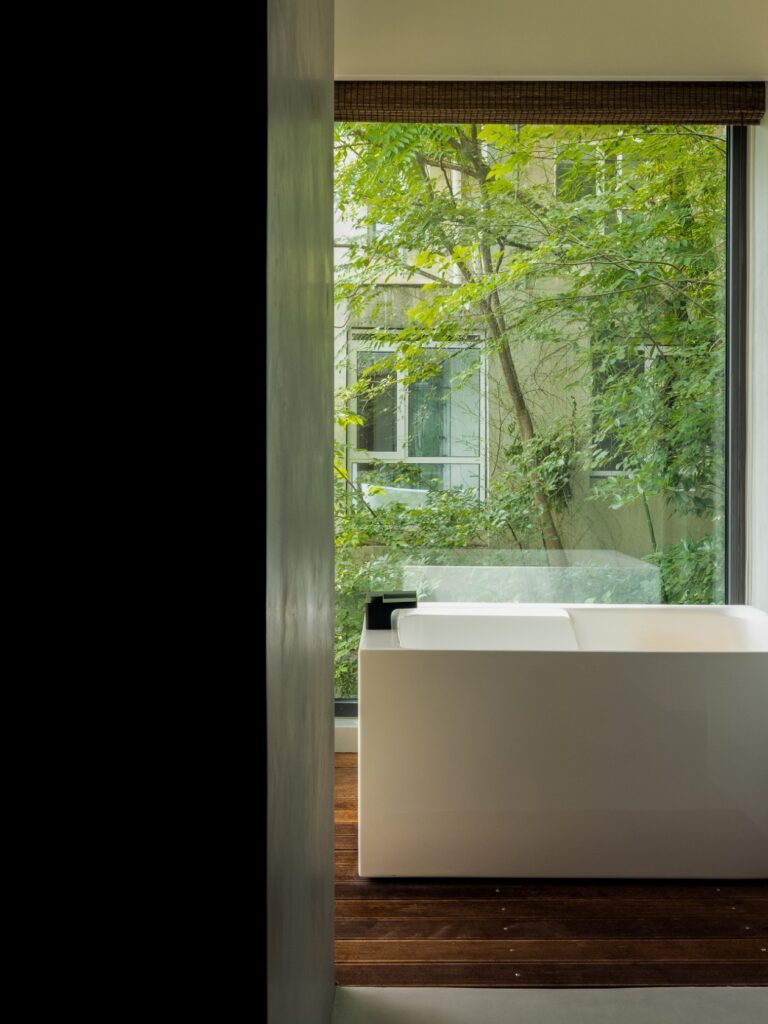
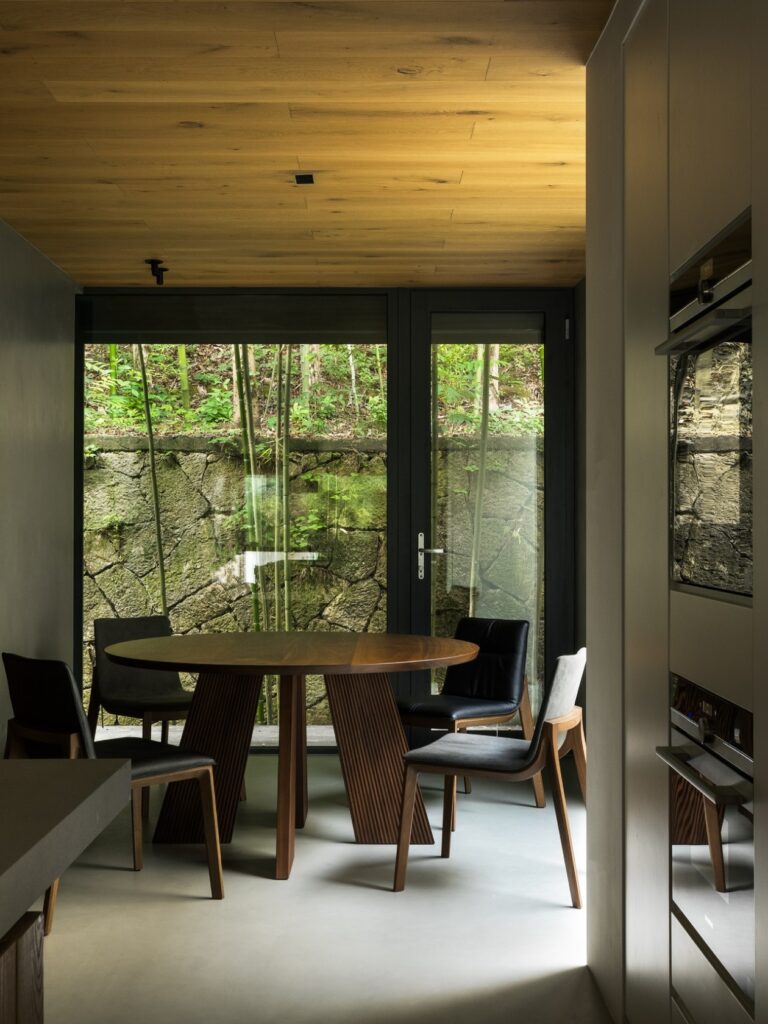
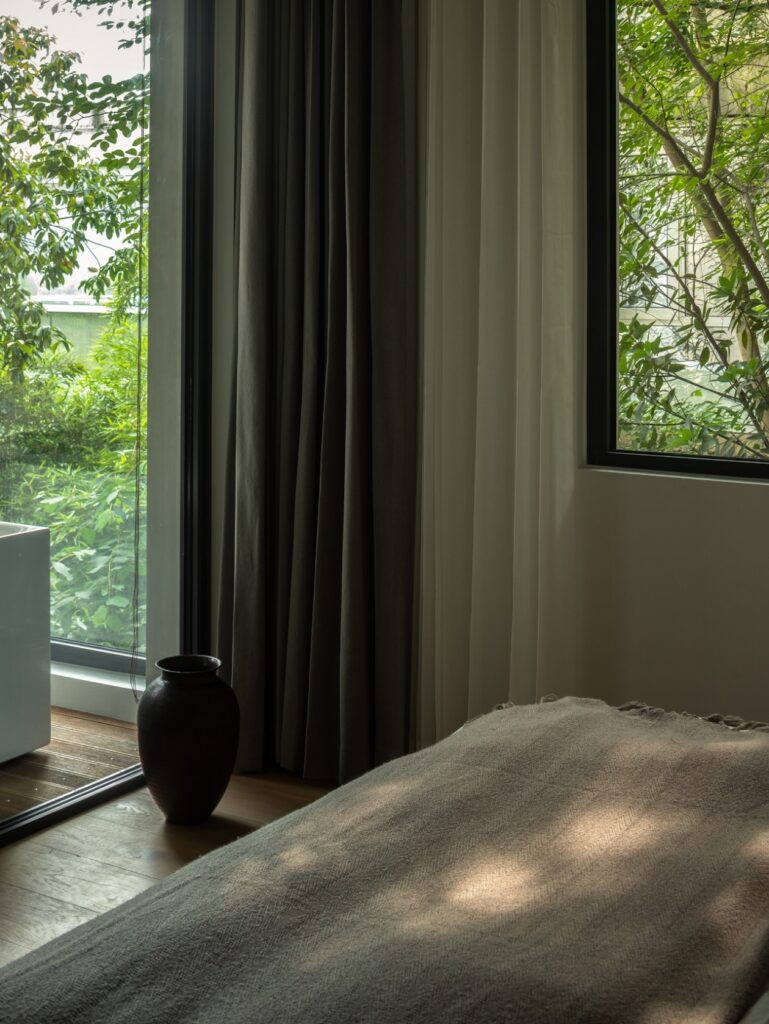
The entire home overlooks the mountains; it is a hillside house, and the south-facing terrace offers a wide view. We opened three sides to create floor-to-ceiling windows, making the window scenery like a picture frame that brings the landscape indoors. The dining area captures the near view, the end of the hallway forms a framed scene, and the study and living room enjoy distant views. Every window in the house is like a framed scene of the changing seasons.
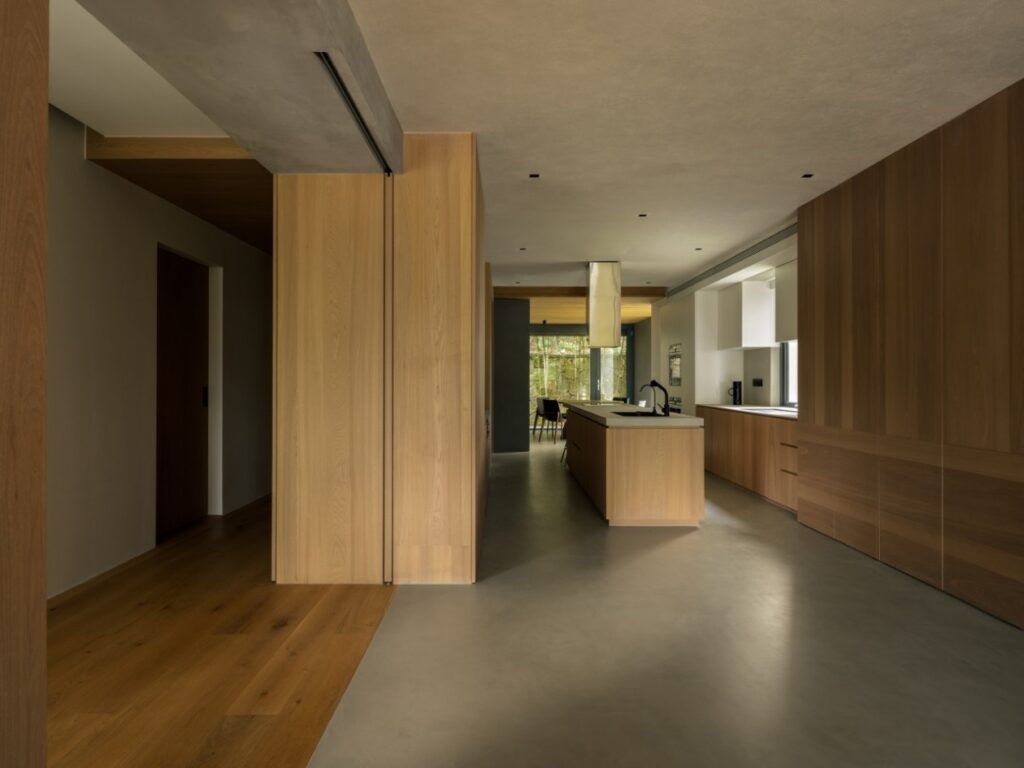
To give the entire space a sense of breathing and vitality, we used a “double loop” design concept to “open up” the home. The master bedroom was converted into a study, the secondary bedroom into the master bedroom, and another room into a quiet room. For the long narrow hallway, we added panoramic windows so it wouldn’t feel oppressive.
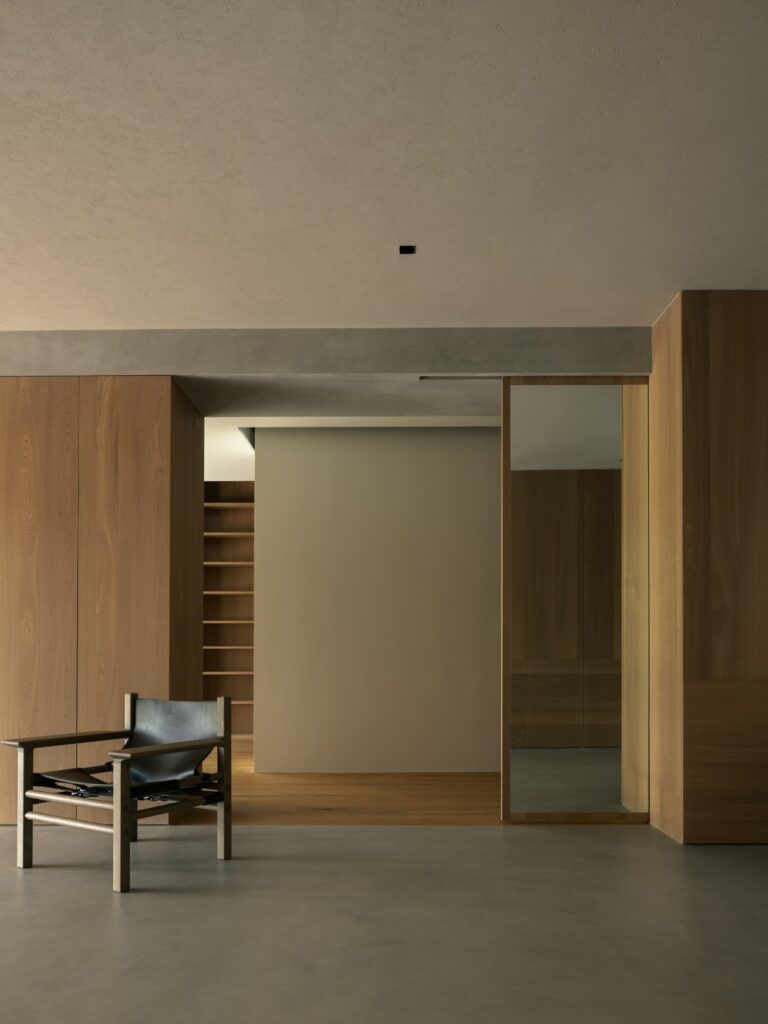
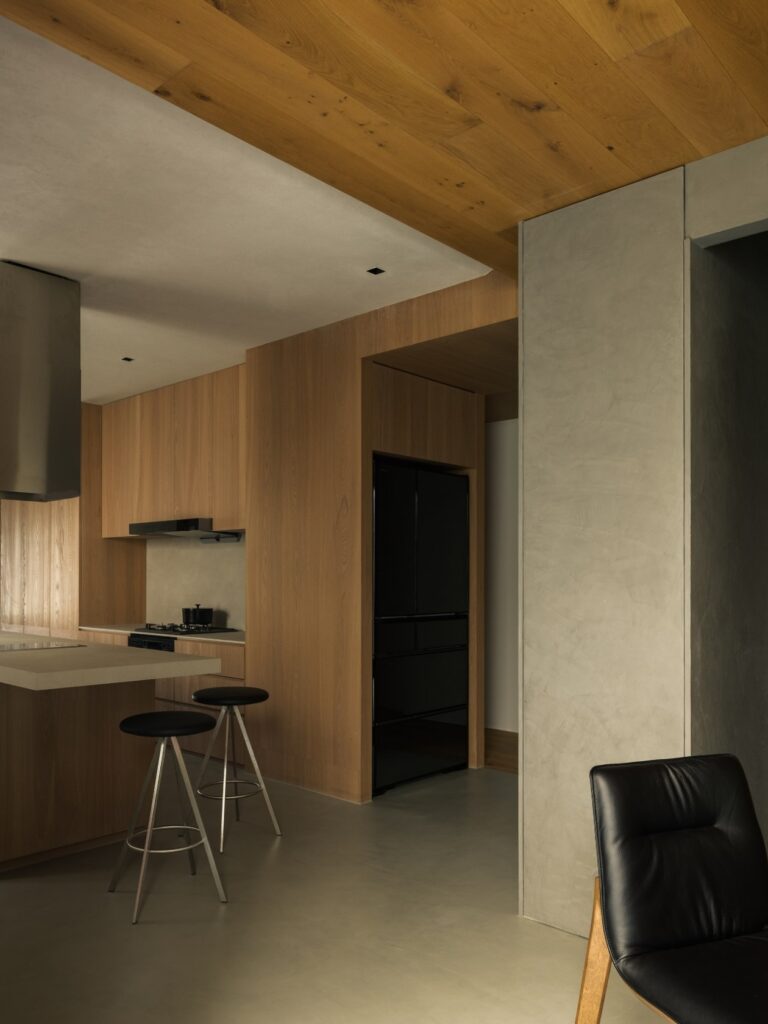
The living room and study form a double pathway, allowing entry and exit from both sides for more openness. The dining area and hallway also form two loops, surrounding the island, cabinets, and walls, connecting the different functional spaces of the home in a circular path. Walking through this space makes people feel free and adds a sense of fun.
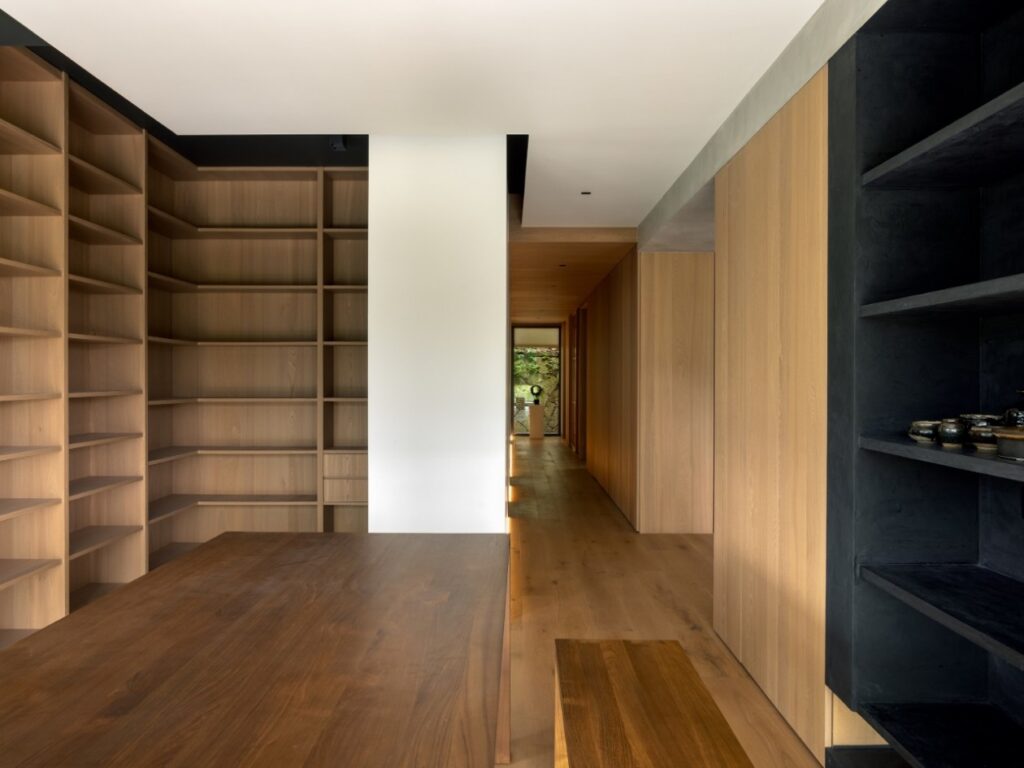
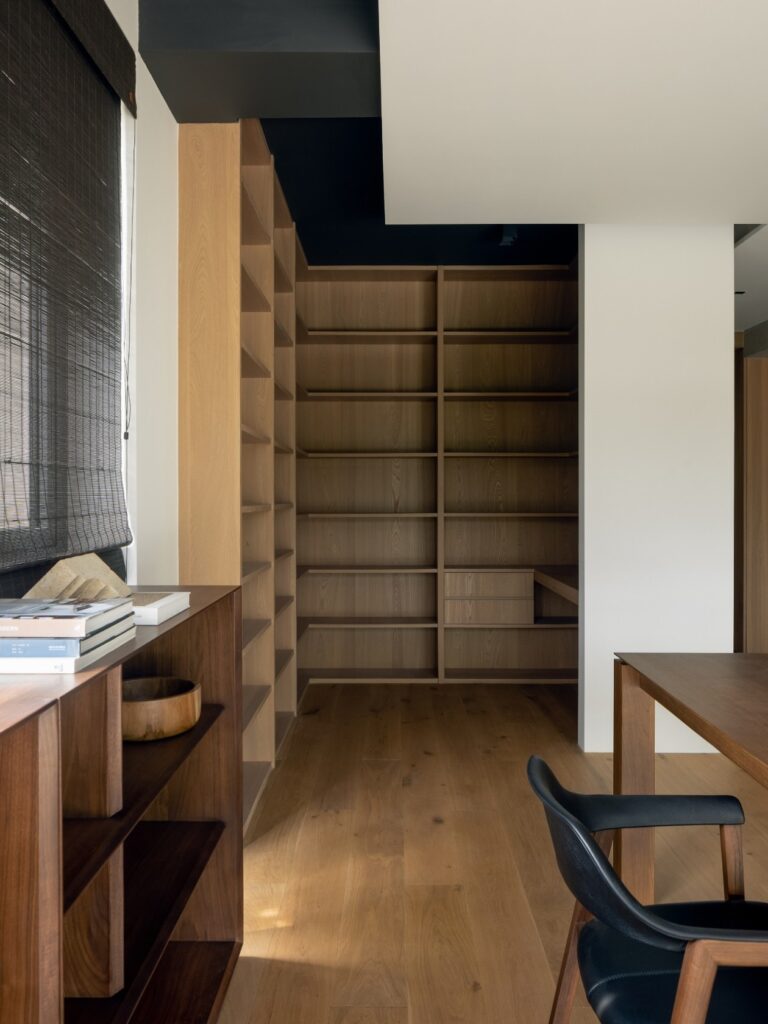
We believe that Japanese-style design first allows people to calm down and second creates a wooden atmosphere. The homeowners pay attention to detail and quality, so we selected many high-quality, historic pieces of furniture. For example, we chose a dining table from the Japanese century-old brand CondeHouse; its geometric table legs blend design into natural solid wood. Since the homeowners need a space for reading and working, we placed a 2.2-meter desk from Ethnicraft in the study. The texture of the teak and the mountain view add a serene, timeless feeling to the space. Thirdly, we preserved raw textures, such as concrete materials, to create a clean atmosphere that helps people feel calm.
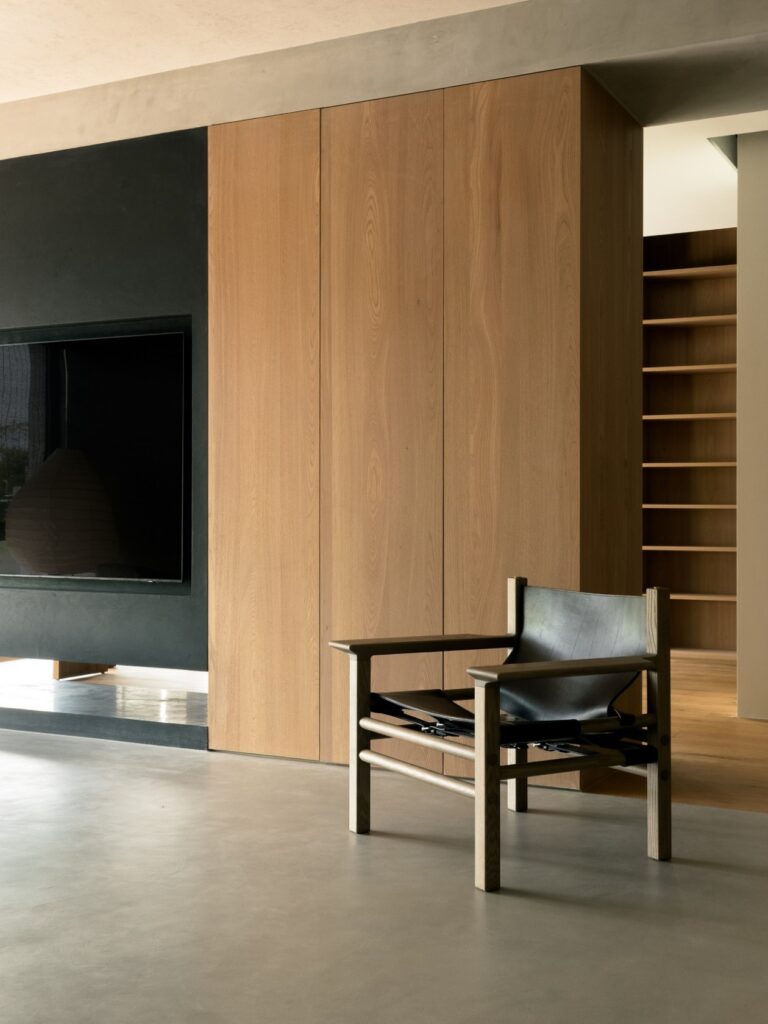
The homeowners initially had storage needs, so during design we allocated storage spaces carefully. They also needed space to exercise and do yoga, so in the living room we installed a pocket sliding door that can extend to reveal a full-length mirror, which can usually be hidden in the wall for a cleaner look. They felt that having a computer in a public area would look messy, so we designed a small corner for it. For usually cluttered items, we used certain methods to partially hide them; in fact, the hallway serves as an open wardrobe, with cabinets on both sides.
Overall, the abundant indoor scenery blurs the line between nature and home. Here, you can exercise while looking outside, as if truly living in the mountains, allowing for healing right at home.