
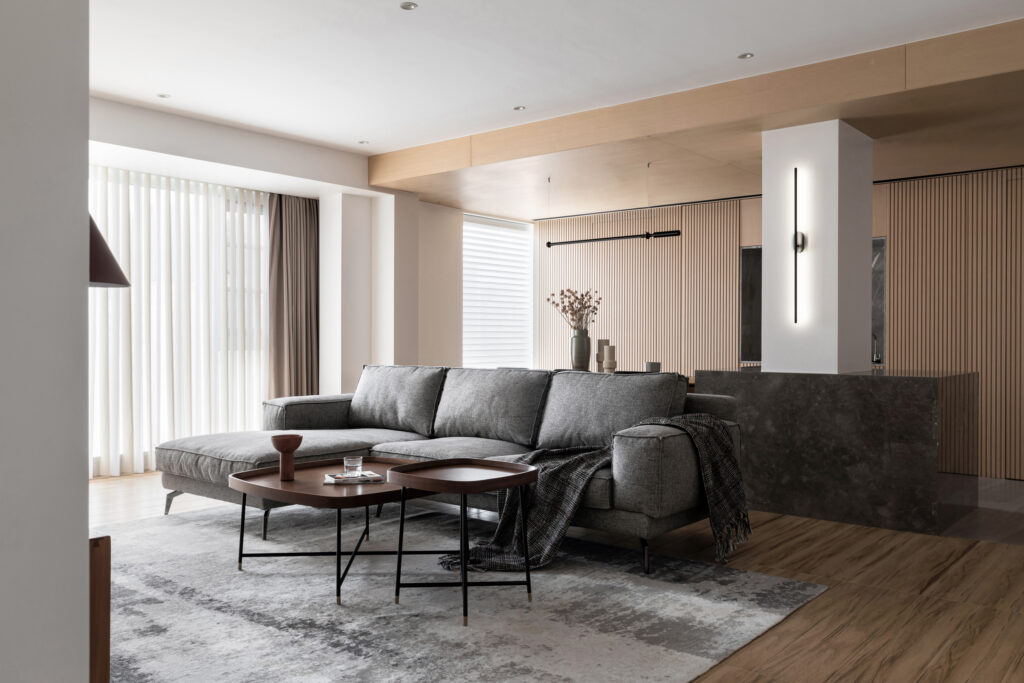
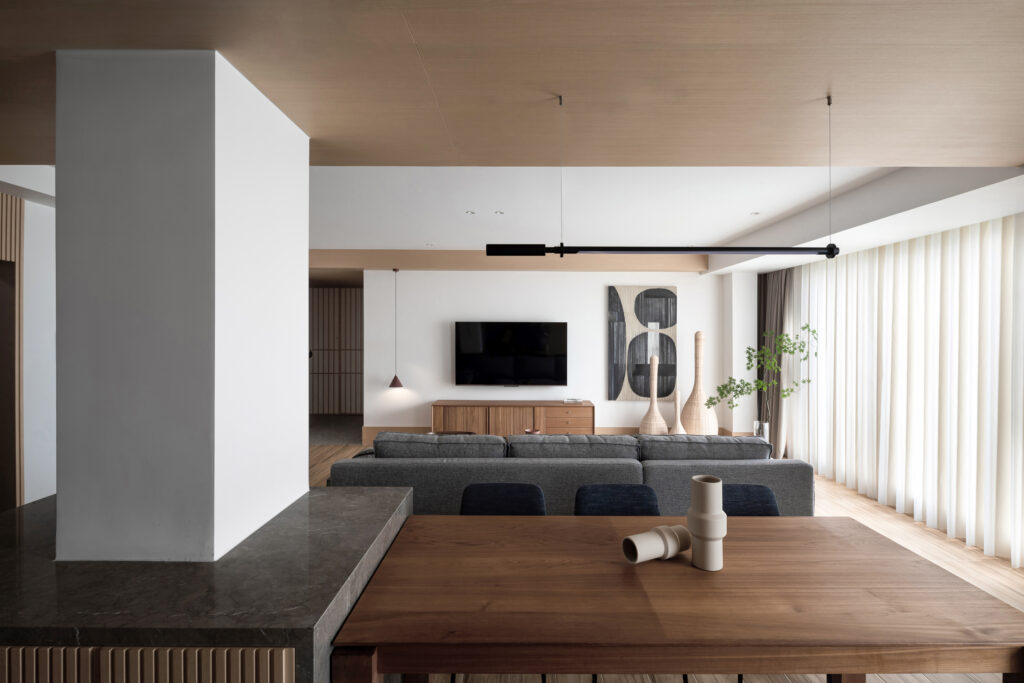
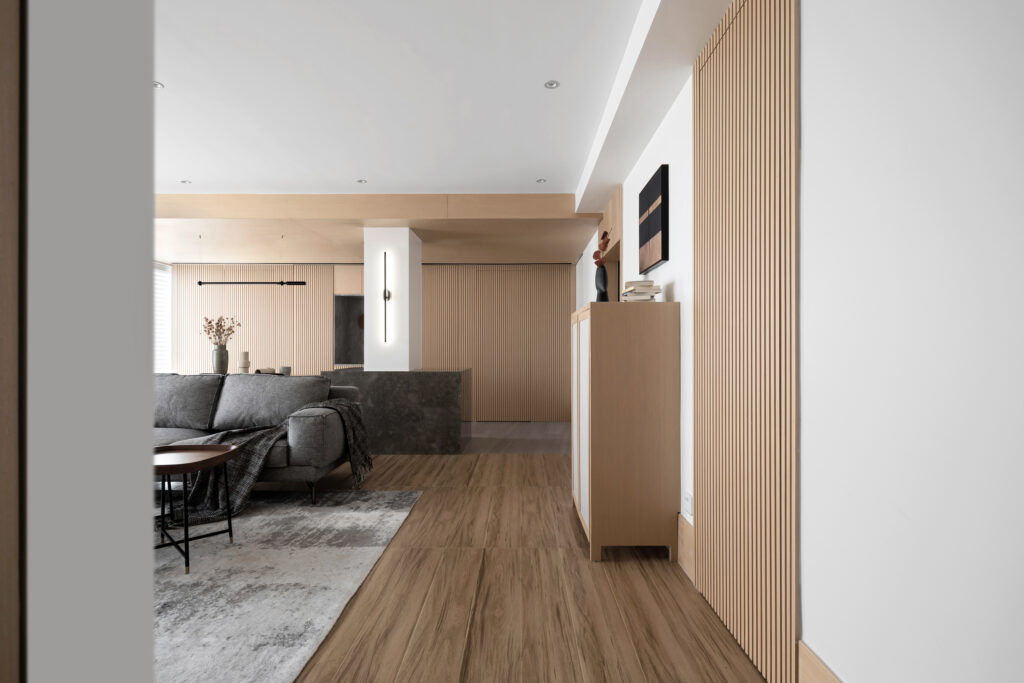
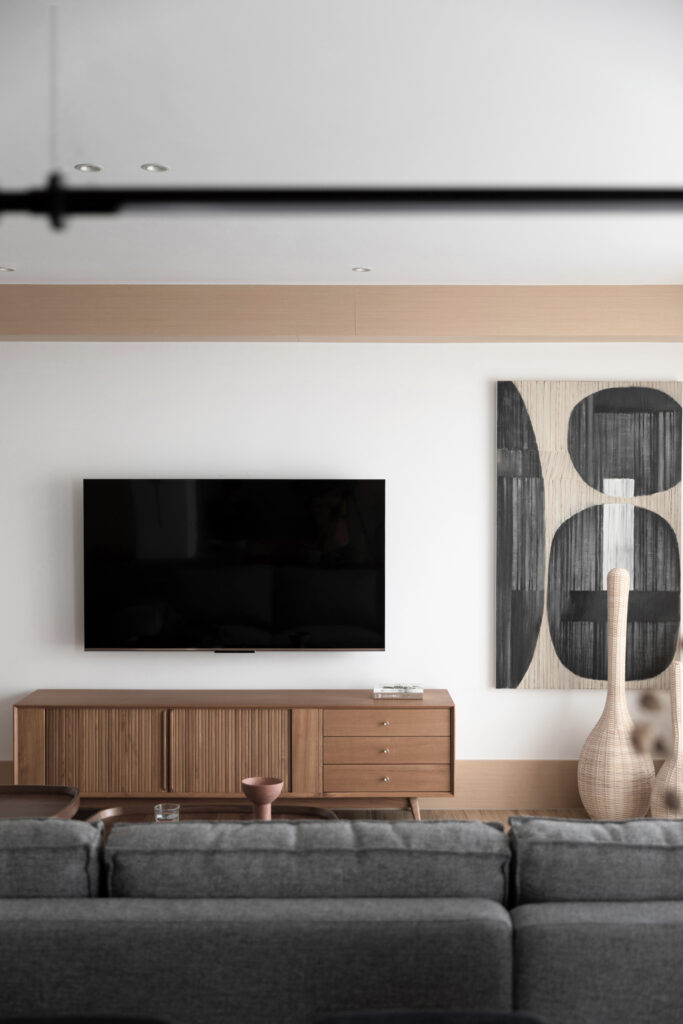
Living room
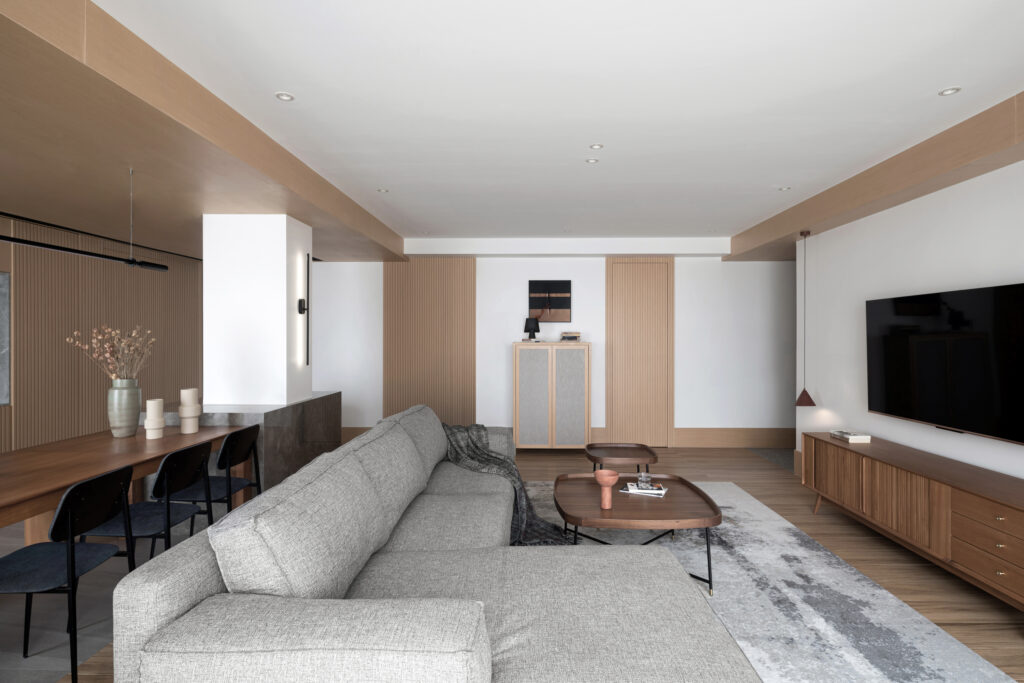
The space is primarily painted in light colors, creating a relaxed and comfortable home atmosphere. The boundaries between spatial forms are blurred, and the formless partitions optimize the fluidity of the space, allowing for a casual and free atmosphere.
Kitchen area
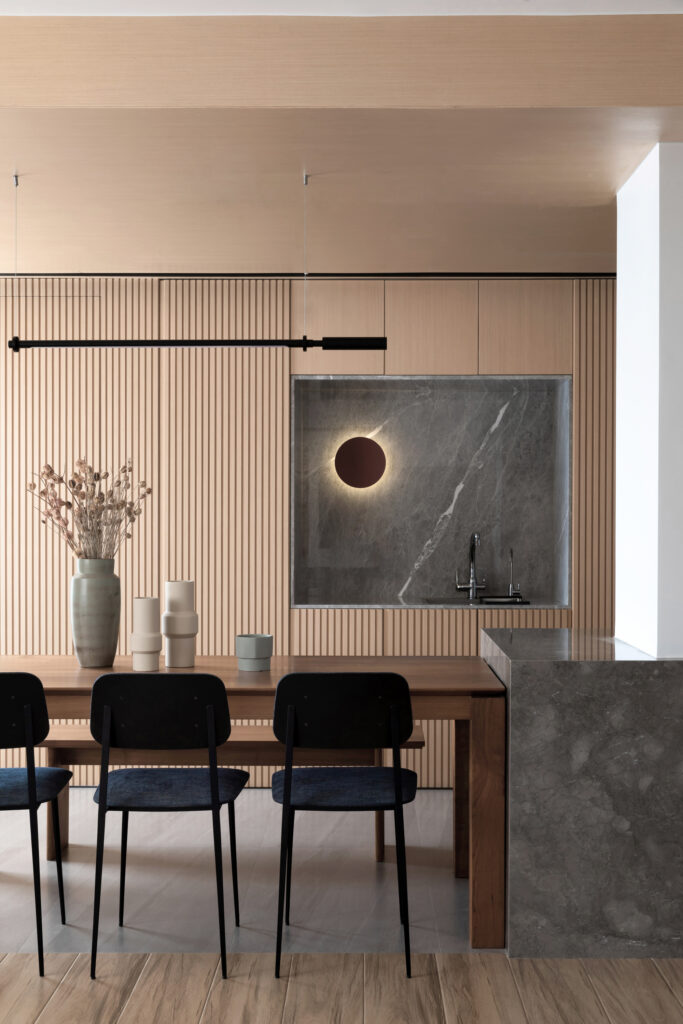
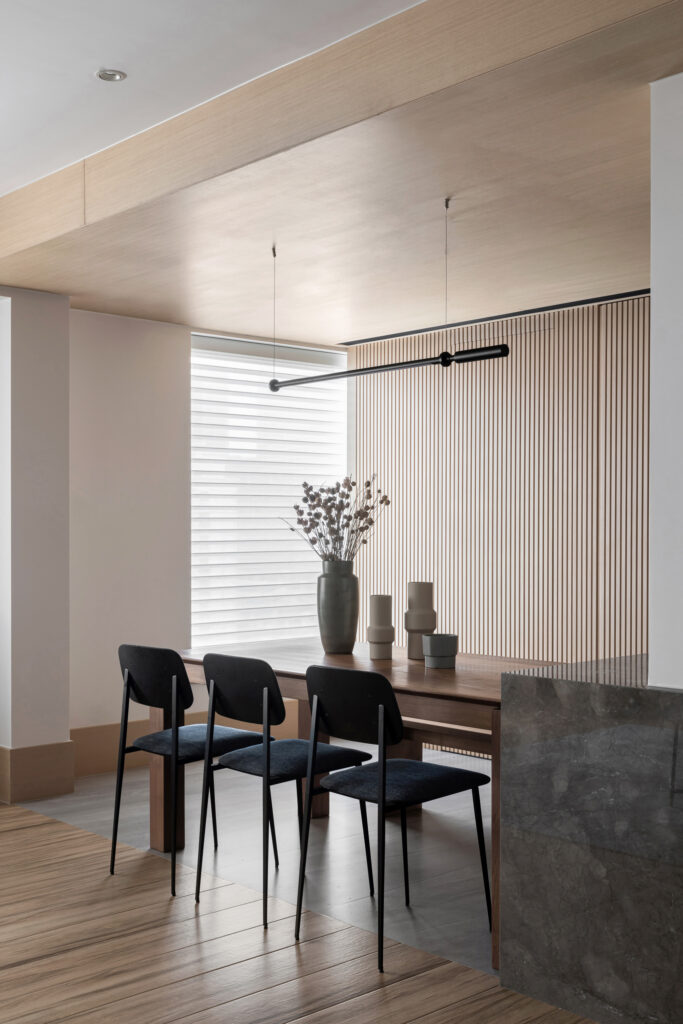
The original load-bearing wall at the corner of the bedroom has been transformed into part of the kitchen and dining area. The island counter flows seamlessly into the dining chair, merging the western kitchen and dining area into one. This rationalizes the spatial structure, creating a coherent and natural interplay between the dining room and the island counter. Light fixtures, in geometric shapes of lines and circles, immerse themselves in the space, enriching the rhythm and cadence of the area.
Master bedroom
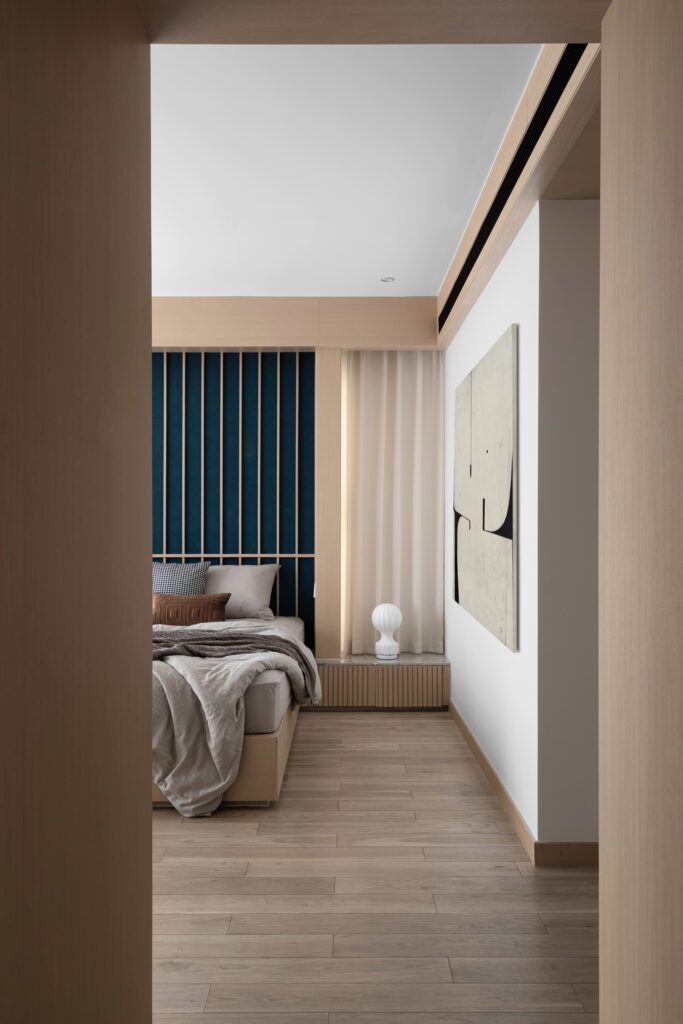
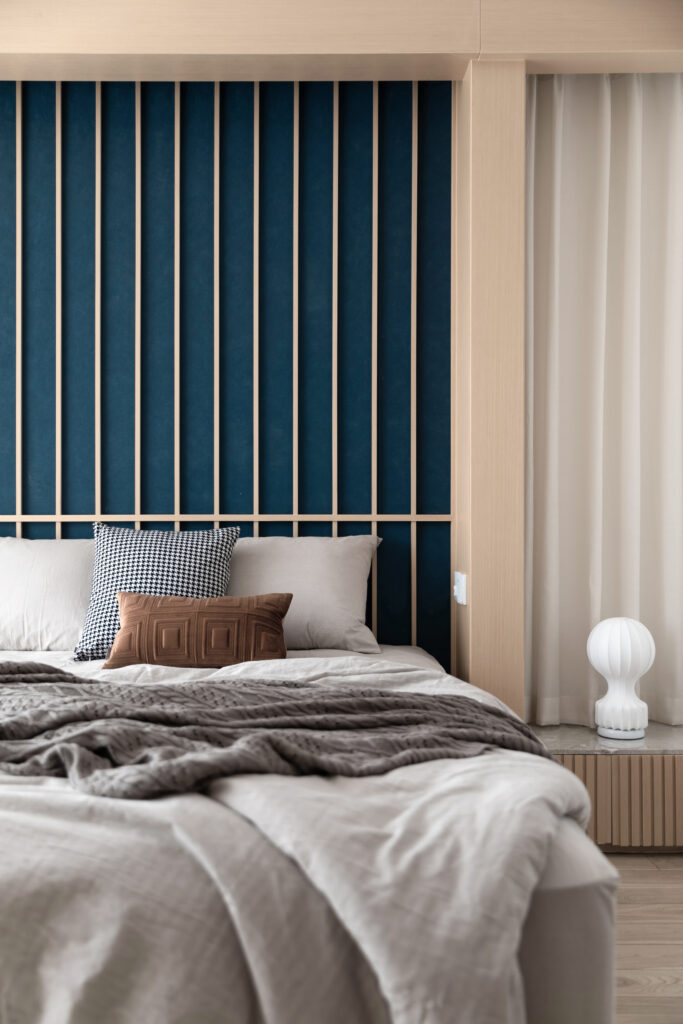
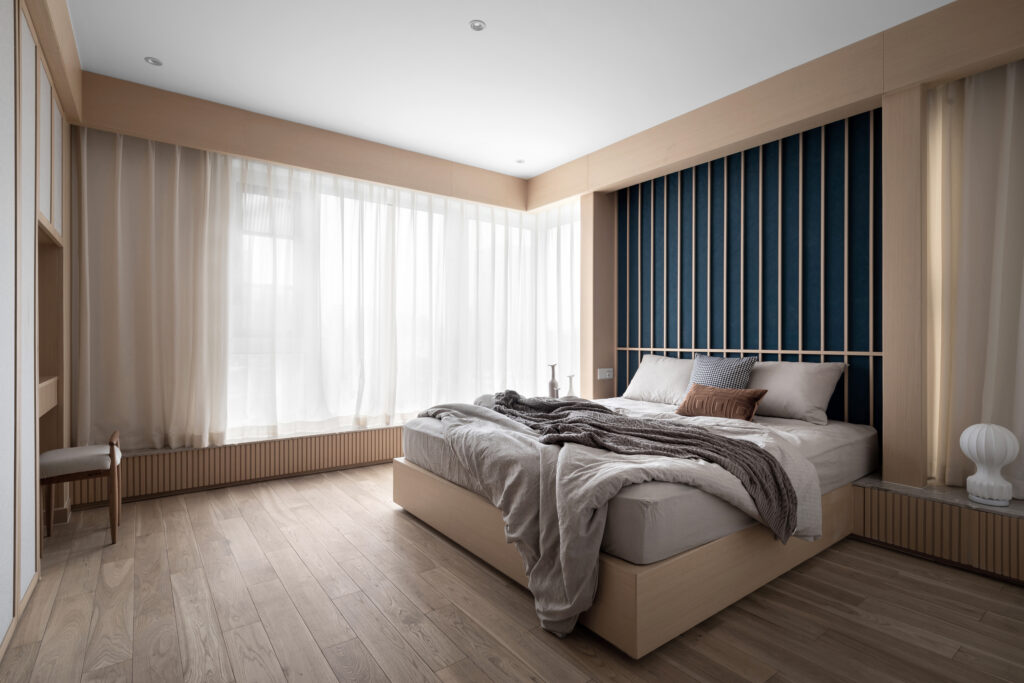
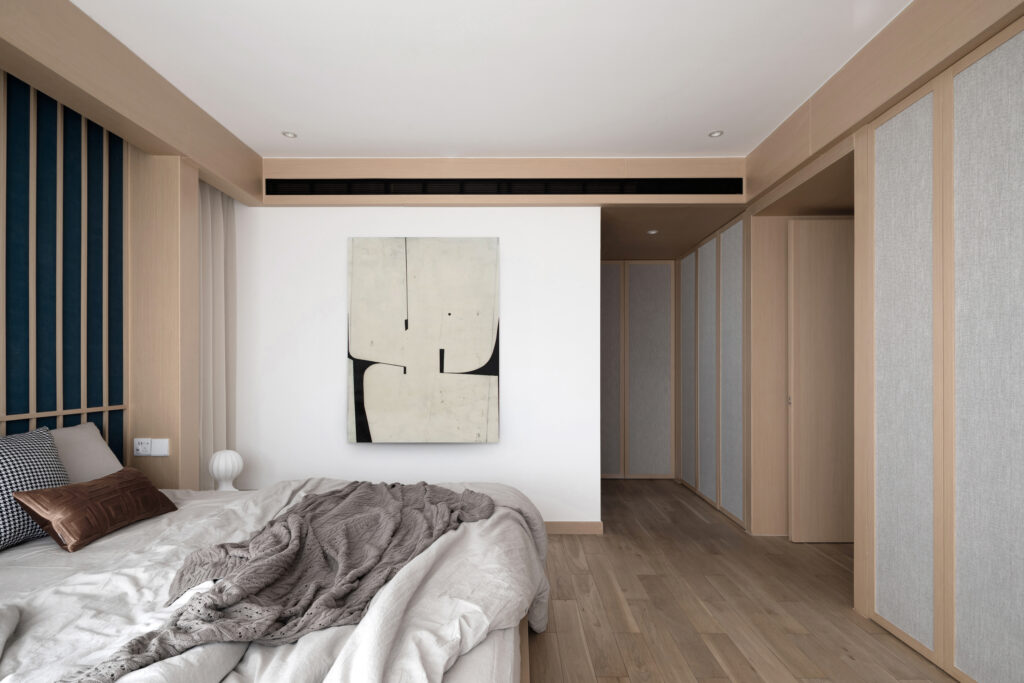
The male owner of this case is particularly sensitive to light and sound, and the sensory enclosure of the sleeping area must be meticulous. This house faces both the road and the river, so to isolate the noisy outdoor environment, triple-layer vacuum glass was used for the windows (including the living room), achieving a sound-absorbing effect. The designer created a groove at the bedside background, allowing the curtains to be pulled in for a perfect shading effect, creating a high-quality sleeping space in terms of audio-visual senses.
Study
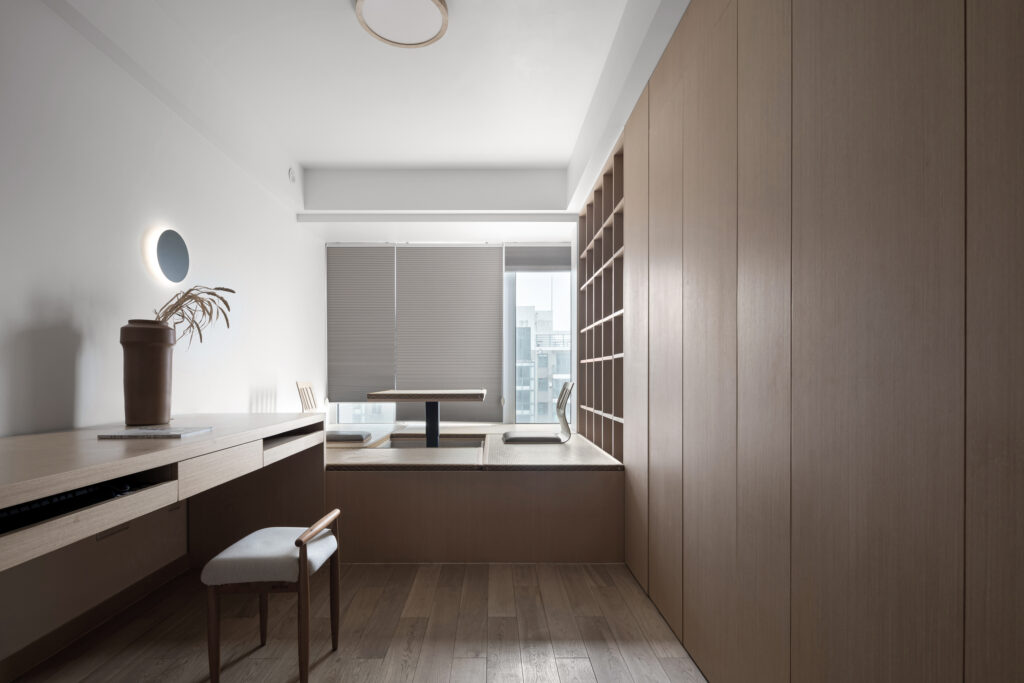
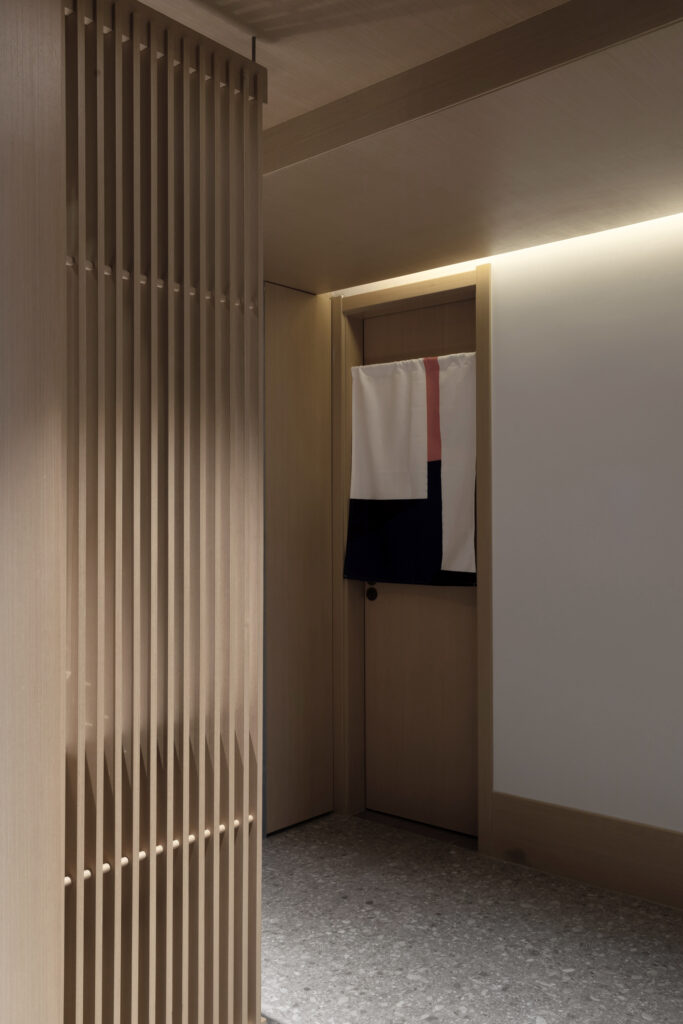
The study is connected to the outside air, with a relatively open grille sliding door that frees up space. The tatami by the window in the multi-functional study serves as a daily home entertainment space and can also be used as an occasional guest room. At the same time, the entrance to the master bedroom has been moved inward, allowing access from the study, eliminating the awkwardness of entering the room and immediately finding a toilet.
On one side of the study door, there is a suspended cabinet that creates a floating sensation and blurs the sense of volume. A small scenery is set up under the cabinet, which also serves as a focal point in the children’s room and the dry area.
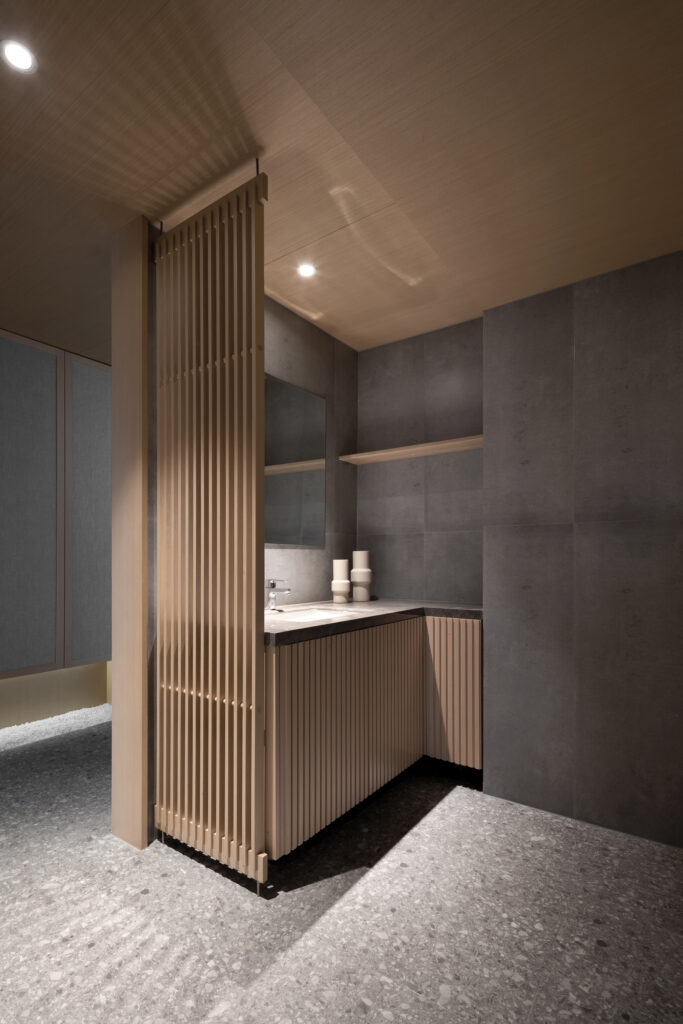
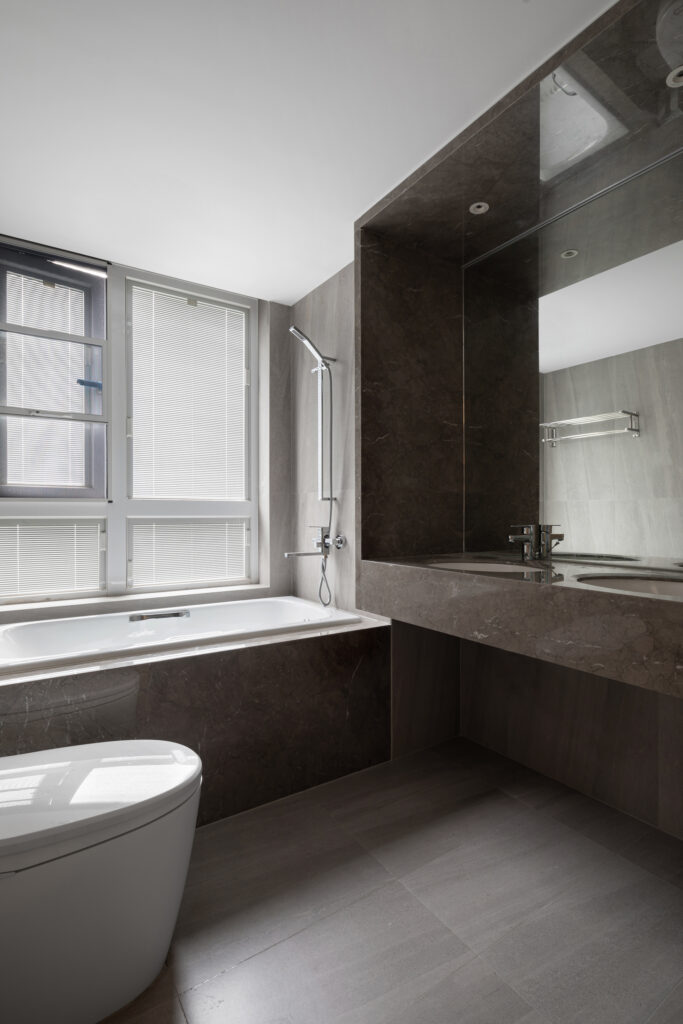
Toilet
By relocating the dining room, we can shorten the distance between the guest and the dining area, enhance the sense of interaction, and simultaneously expand the spatial limits of the guest and dining areas. The reasonable expansion of leisure space gives the home a more breathable feel, and the reasonable adjustment of area brings psychological relief. The main circulation line of the home is circuitous, with interconnected areas rather than isolated small blocks, creating a transparent and coherent space.